


Trading Legend
3.62.05K Reviews
App Specs
- Version
- Varies with Device
- Updated On
- License
- Free
- Downloads
- 1,000,000+
- Developer
- 37GAMES Interactive Entertainment
- Categories
- Simulation
- Platform
- Android
Screenshots






 Analysis by AppCompare
I went into Trading Legend expecting a light historical time-killer and found a more involved merchant simulation, built around growing a business in an ancient Chinese setting. Its first appeal is easy to understand: there are shops to develop, goods to trade, people to meet, and a larger enterprise to shape over time. The key question for me is not just whether that opening feels inviting, but whether the routine stays worthwhile once the novelty wears off.
A welcoming first week, with plenty to take in
The game eases new players in with a tutorial, so the basic rhythm of trading, managing resources, and making decisions is not dumped on you all at once. Starting as a modest merchant gives the early progress a clear direction: build up your business, learn how its pieces fit together, and decide where to put your attention next. I found that gradual introduction more comfortable than being asked to understand every part of an empire-building game immediately.
The setting does useful work beyond decoration. Colorful environments, character art, and sound give the markets a lively feel, and the ancient China backdrop helps the game stand apart from simulations set in modern shops or familiar fantasy kingdoms. I enjoyed pausing to look around, though visual charm alone will not carry the experience for players who want a fast-moving story or action-heavy play.
In its first stretch, the strongest draw is the sense that several kinds of activity connect to one broader goal. Opening shops, pursuing trade opportunities, and dealing with characters all feed into the feeling of building a commercial network rather than completing isolated stages. That gives curious players a reason to explore. It also means the game suits people who like learning a routine and improving it, not those who want every session to deliver a self-contained conclusion.
What makes the business loop interesting
At the heart of the experience is a familiar but satisfying choice: spend resources now for growth later, or hold back until a better opportunity appears. The game presents different routes to progress, including developing shops and taking on trade missions. I would approach those options as competing demands on attention rather than assuming every available task deserves an immediate yes. When a game asks you to grow several things at once, choosing a priority is part of the strategy.
That is where the simulation side has more appeal than a simple idle-style collection game. The pleasure comes from considering how one decision affects the wider business, then seeing whether the result makes the next step easier. If you enjoy managing a small operation and gradually thinking on a larger scale, this loop can be more engaging than tapping through rewards without much context. If you would rather have direct control over every transaction, however, the broader progression may feel less precise than a dedicated trading or management sim.
Characters add another layer to that planning. Non-player characters are tied to story and opportunities such as alliances and trade deals, so talking to them is not merely a bit of background flavor. My practical advice is to treat those interactions as part of your business planning: when a new character or deal appears, consider what it could contribute before spending your attention elsewhere. That makes the social side feel connected to the merchant role instead of like a separate checklist.
Worth Reading Before You Choose

EA SPORTS FC Mobile 26 Is a Bigger Football Game, but It Takes Time

Flipboard Shows What News Apps Must Do Beyond the Feed

Switching to Android Auto Means Rethinking Your Driving Routine

Google Calendar Makes a Crowded Week Easier to Manage

Ludo King Makes the Most of the Minutes Between Plans

Baby Panda World Brings Quick Play to Modern Phones, but Its Game Library Feels Busy
How to make progress without turning play into a chore
A useful way to fit the game into an ordinary day is to give each session a small purpose. For example, after a busy morning, you might open it during a break, check what your current business needs, and focus on one shop or trade opportunity before putting the phone away. On a quieter evening, you could spend longer exploring character interactions and deciding what to develop next. Thinking in those short, deliberate sessions can make the many possible activities feel manageable.
There is a trade-off: the game’s ongoing goals encourage regular visits, and that can change a pleasant routine into a sense of obligation. I would not try to keep up with every event or quest just because it is available. Pick the activities you actually enjoy, and let the rest go when real life is busy. A mobile simulation should fit around your day; if you find yourself logging in only to avoid feeling behind, that is a good point to take a break.
For month-to-month value, the combination of progression, quests, and special events offers reasons to return beyond the initial tutorial. The events can bring distinct goals and rewards, while the wider business gives you a continuing project. Still, recurring tasks are not automatically fresh content. If you are motivated by the feeling of steadily improving an empire, the long arc may be enough; if you need a new narrative twist or a radically different mechanic every time you play, the repeated management cycle may begin to feel familiar.
Competition, events, and the social commitment
Guilds and guild activities give the game a more social direction, with trade wars adding a competitive element. That may be a welcome change from managing everything alone, especially if you like comparing progress or coordinating around shared goals. It is also a commitment to consider: social play tends to feel better when you want interaction, not when you are treating every group activity as another deadline.
I would decide early whether the community features are central to the fun you want. Players who enjoy guilds can make them part of their long-term routine; solo-minded players can focus more on the business and character sides. The distinction matters because the social layer changes the feel of the game from private empire-building toward participation with others. If you are looking for a purely offline-feeling, self-paced management experience, a less community-oriented simulation may suit you better.
The game is developed by 37GAMES Interactive Entertainment and is free to start, though in-app purchases range from $0.29 to $299.99 per item. That wide span makes it sensible to decide on a spending limit before playing, rather than treating purchases as an afterthought when progress slows or an event catches your interest. You can enjoy the basic premise without assuming that paying is necessary, but players who are uncomfortable with optional purchase prompts should be particularly deliberate about their boundaries.
Where the friction can build
The same breadth that makes the business appealing can create a maintenance burden. Shops, resources, missions, character opportunities, quests, events, and guild activity all compete for your attention. Even when each element is understandable on its own, keeping track of several lines of progress can make a short visit feel like administration. I recommend choosing one main goal for a session instead of trying to clear every notification or pursue every opportunity at once.
There are also different kinds of fatigue to watch for. One is repetition: commercial growth is the central fantasy, so players who tire quickly of checking resources and making incremental decisions may reach that point well before the game runs out of goals. Another is schedule pressure, since regular events and social activities can make missing a day feel more consequential than it should. And a third is strategic dilution: if you prefer a simulation where every choice has a clearly visible, immediate effect, a broader game with multiple progression routes may feel less focused.
Against the usual alternatives, this is best understood as a character-rich, historically styled business simulation with social and event layers, rather than a pure shop-management sandbox. A more hands-on tycoon game may be preferable if you want detailed control over layouts or operations; a conventional strategy game may be a better fit if you mainly want battles and tactical encounters. This one makes more sense when the appeal is the blend of merchant growth, setting, character interactions, and shared play.
Who is likely to keep it installed?
I think it is a good match for players who like steady progression, enjoy checking in on a developing business, and find the historical atmosphere appealing. It can also work for someone who wants a game to revisit in short bursts, provided they are comfortable deciding which tasks to leave for later. The Teen content rating is worth keeping in mind for families choosing a game, and the minimum requirement is Android 5.0.
I would be more cautious if you want a complete experience that can be played at any pace without recurring goals, if you dislike guild competition, or if in-app purchases make you uneasy. It is also not my first recommendation for someone seeking a deep economic model with transparent control over every market decision. The rating averages 3.6 from around 32,000 ratings, while more than a million installs show that it has found a substantial audience; those figures are context, not a substitute for matching its routine to your own tastes.
Does it earn a lasting place?
For me, the lasting value depends on whether the merchant loop remains satisfying after the first burst of discovery. The ancient setting, shop growth, trade missions, character dealings, events, and guild play give the game several ways to hold attention. But they also create a game that asks for ongoing attention, and that is not the same as being endlessly compelling. I would keep it installed if I enjoyed making small business decisions and wanted a continuing project; I would let it go if its reminders started to feel like chores.
As a free simulation, it is easy to sample without making it a major commitment, but I would go in with a clear idea of what I want from it: a gradual commercial journey with social options, not a tightly scripted historical adventure or a hands-off idle game. Give the tutorial time, choose a manageable priority, and avoid spending simply to keep pace. That approach makes it easier to judge whether the routine itself is fun for you.
The Gameplay Experience
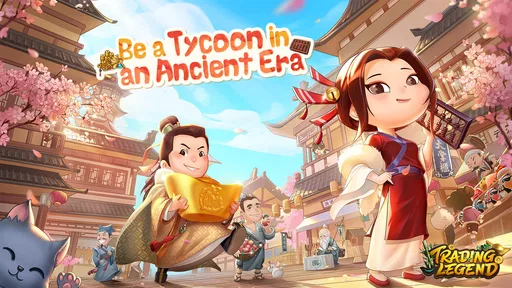
Jumping into Trading Legend is like stepping into a vibrant tapestry of ancient markets, bustling streets, and intriguing characters. The game kicks off with a tutorial that gently eases you into the mechanics. You start as a humble merchant, tasked with growing your business by trading goods, managing resources, and making strategic decisions.
The game’s charm lies in its attention to detail. Everything from the art style to the sound effects immerses you in the world of ancient China. The graphics are colorful and engaging, with each character and setting beautifully rendered. I found myself spending a good chunk of time just admiring the detailed environments.
Building Your Empire
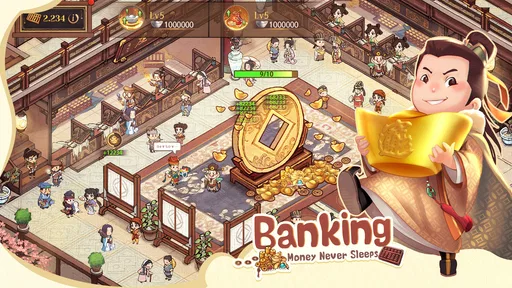
At its core, Trading Legend is all about strategy. You’ll need to be smart about how you manage your resources, invest in new opportunities, and expand your business operations. The game offers a variety of paths to success, from opening new shops to participating in trade missions.
One of the most enjoyable aspects is the interaction with NPCs (non-player characters). These characters not only add depth to the story but also provide opportunities for alliances and trade deals. It’s like a never-ending chess game where each move can lead to new opportunities or unexpected challenges.
Challenges and Rewards
As with any business, Trading Legend isn’t without its challenges. You’ll face competition from rival merchants, natural disasters, and fluctuating market demands. But overcoming these hurdles is part of what makes the game so satisfying. The reward system is well-balanced, providing a sense of progression without feeling too easy or too difficult.
Moreover, the game features special events and quests that keep things fresh and exciting. These events often come with unique rewards, encouraging players to log in regularly and participate actively.
Community and Social Features
What sets Trading Legend apart from similar games is its strong community aspect. Players can join guilds, participate in guild events, and even compete against other players in trade wars. This social component adds a layer of depth and interaction that enhances the overall gaming experience.
The developers seem committed to keeping the community engaged with regular updates and new content. It’s clear that they listen to player feedback, which is always a good sign in the mobile gaming world.
Final Thoughts
In a market saturated with strategy and simulation games, Trading Legend stands out with its unique setting, engaging gameplay, and vibrant community. It’s a game that requires strategic thinking and offers a rewarding experience for those willing to invest the time.
Whether you’re a fan of historical simulations or just looking for a new mobile game to sink your teeth into, Trading Legend is definitely worth a try. So, what are you waiting for? Dive into the world of ancient China and start building your empire today!
Pros
- Engaging storyline and quests.
- Stunning graphics and animations.
- User-friendly interface.
- Variety of trading strategies.
- Regular updates and events.
Cons
- Requires constant internet connection.
- In-app purchases can be pricey.
- Steep learning curve for beginners.
- Occasional lag in busy areas.
- Limited support for older devices.
FAQs for Trading Legend
What is Trading Legend about?
Trading Legend is a simulation game where players take on the role of a business tycoon in ancient China. The game combines elements of strategy, resource management, and historical storytelling. Users will build and expand their business empire by trading goods, investing in resources, and navigating the challenges of the marketplace.
Is Trading Legend free to play?
Yes, Trading Legend is free to download and play. However, like many mobile games, it offers in-app purchases that can enhance gameplay. These purchases can include currency packs, special items, and other enhancements. Players can enjoy the game without spending money, but purchasing items may accelerate progress.
What are the system requirements for Trading Legend?
Trading Legend requires Android 5.0 or later, or iOS 10.0 or later. The game is optimized for both phones and tablets, ensuring a smooth experience on a variety of devices. To enjoy the best performance, ensure your device is updated and has sufficient storage space available.
How can I progress quickly in Trading Legend?
To progress quickly in Trading Legend, focus on efficiently managing resources and completing missions. Engage in daily tasks and events to earn rewards, and consider strategic partnerships. While in-app purchases can speed up progress, dedicated play and smart strategies are key to thriving without spending money.
Is an internet connection required to play Trading Legend?
Yes, an internet connection is necessary to play Trading Legend. The game features online components such as global trade and events, which require connectivity. A stable internet connection ensures you can fully enjoy the game’s features and interact with other players in the community.


